It’s 6:40 am today, June 12, when I notice from the kitchen window the formation of another bloom on my hibiscus on our back deck. I have a fondness for hibiscus flowers which started when visiting my grandmother in Orlando as a teenager. They were not in the garden in my home in New Jersey. To me they were exotic, the epitome of tropical foliage. I remember taking a bloom and placing it in my hair and feeling very glamorous.

I prepared my coffee and breakfast then headed out to the deck and noticed a slight change in the bloom. I have seen time lapse videos of flowers progressing from bud to full bloom. Since my time this morning was unscheduled I decided to start my own tracking of the process and took the first photo at 6:59 am.
The weather outside was humid and overcast with a slight breeze now and then. I continued with my coffee and breakfast, wondering how long until the next noticeable change in the bloom. My next glance at the plant occurred at 7:19 am which revealed the bloom opening more.
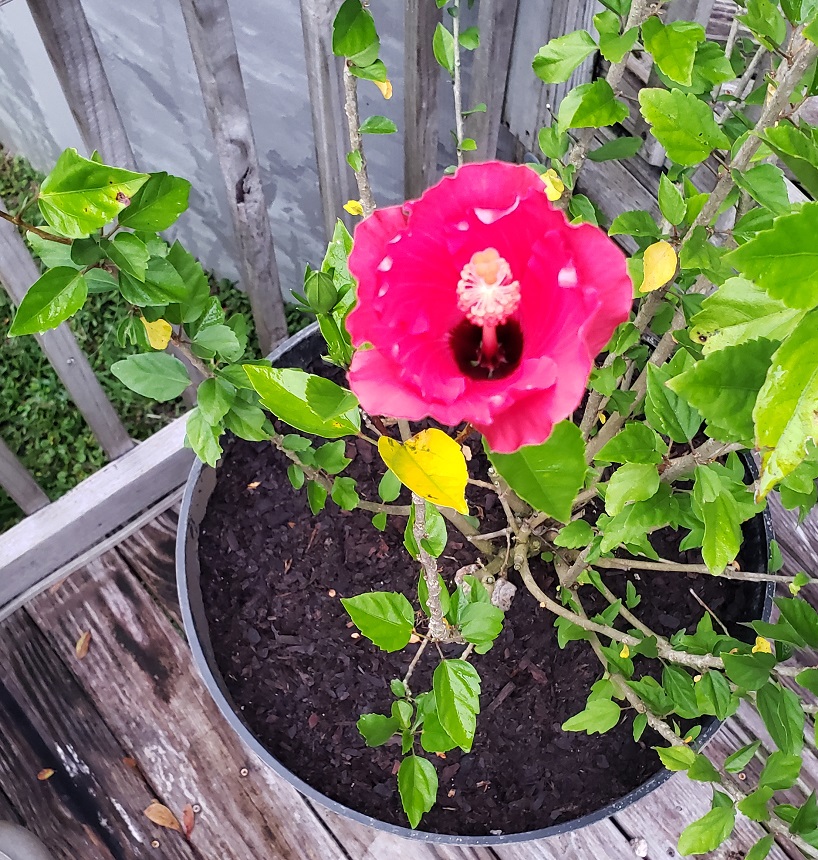

I noted that the next noticeable change occurred at 7:41 am. To my surprise the flower was now what I view as being 75% open. Within minutes the flower had reached full bloom as I recorded at 7:48 am.
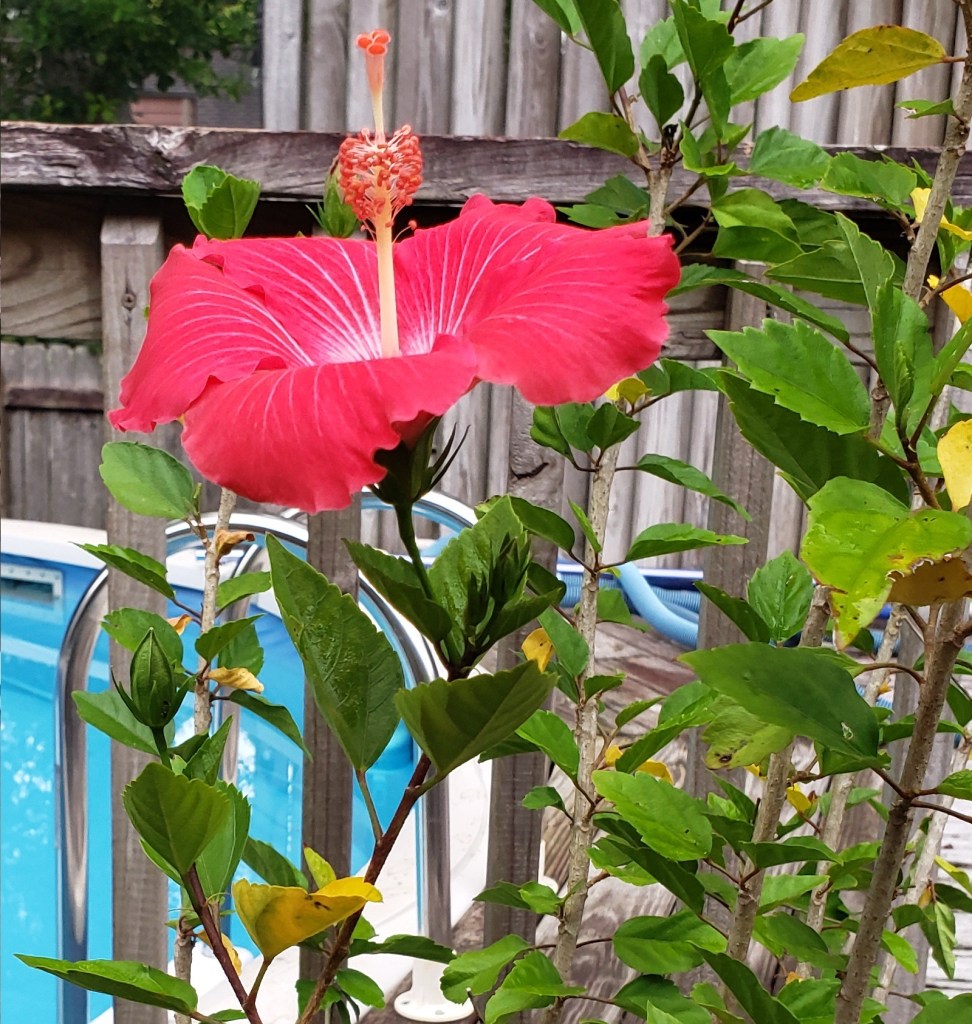
In the span of a little over an hour I had witnessed nature in action. I was provided with the opportunity to stop and watch what has occurred many times before but had not fully grasped.
I have always loved the saying ‘bloom where you are planted’. This phrase reminds me to make the best of wherever you are, to bring brightness in the situation. My hibiscus was full of leaves and multiple blooms last year. Unfortunately, during the winter the cold took its toll and I was not sure it would make it. It is not as full as it once was, and blooms now occur one at a time. It is the essence of the phrase blooming where it is planted bringing beauty to the surroundings.
I have written previously about the lessons nature can provide if only we take the time to observe. My takeaway lessons from today’s encounter in nature center on time, change and presence.
Time
When was the last time you took an hour to observe your surroundings? While my example is that of nature, it could easily be applied to your surroundings in work and family life. The transformation of the flower occurred within an hour. What can be transformed in an hour for you? What do you need to do to take the time for observation?
Change
It is written that the Greek philosopher Heraclitus said ‘the only constant in life is change’. Change occurs around us, sometimes slow and subtle and other times quick and obvious. The change occurring in the hibiscus was quick and obvious because I was in a position to observe the changes as they occurred. Would you agree that even the changes that appear slow and subtle have moments of progress? Are there things keeping you from observing the changes, however minute they may be?
Presence
The flower I observed was initially minimal in appearance, not taking center stage if you will. As it blossomed it became more and more prominent in its surroundings. This got me thinking about interacting with others. How many times have people been overlooked because they had not yet fully developed in whatever the situation? Have there been times when the person developing at a slower pace has been left out due to the perception of those around them that they were not progressing or changing? Has their presence been dismissed or minimized? Could my presence have impacted their contribution in a positive way?
The next time I find myself feeling as though things are not changing as I would like, it would do me good to take the time to observe and consider the questions and to focus on the subtleties occurring. How about you?
Peace.


 Rosemary Prince, LLC
Leave a comment